ByJohn A
Electric Main Switch Board: Components, Functions, Safety Measures, and Selection Tips
An electrical distribution system needs a reliable point where incoming electricity can be controlled, protected, and distributed to different circuits. The main switchboard performs this function in residential buildings, commercial facilities, factories, and other properties. Its design affects electrical safety, power distribution, maintenance, and the reliability of connected equipment.
Understanding how an electric main switch board works helps property owners, facility managers, contractors, and electrical professionals make informed decisions about installation and maintenance. The right equipment depends on the building’s electrical load, supply characteristics, operating conditions, and applicable safety standards.
What Is an Electric Main Switch Board?
An electric main switch board is an electrical assembly that receives power from the incoming supply and distributes it to designated circuits or downstream distribution boards. It contains switching devices, protective equipment, busbars, and other components that help manage the flow of electricity.
Depending on the installation, the board may receive power from a utility supply, transformer, generator, or another approved source. Its main purpose is to provide a controlled distribution point while allowing authorised personnel to isolate equipment and protect circuits against electrical faults.
The size and complexity of a board vary considerably. A small commercial building may require a relatively simple assembly, while a manufacturing facility could need a larger system designed for high current ratings, multiple feeders, and demanding operating conditions.
Main Components and Their Functions
The performance of a switchboard depends on the suitability and coordination of its components. Each part serves a particular purpose within the distribution system.
Main Circuit Breaker
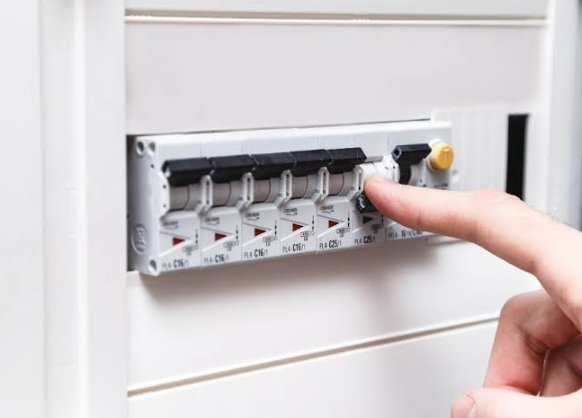
The main circuit breaker provides a means of switching and isolating the incoming supply and, where appropriately rated, interrupting fault currents. Depending on the installation, it may be an MCB, MCCB, ACB, or another suitable switching and protection device.
The selection depends on the rated current, prospective short-circuit current, operating requirements, and coordination with downstream protective devices.
Busbars
Busbars are conductive metal bars, commonly made from copper or aluminium, that distribute electrical power within the assembly. Their dimensions, material properties, support arrangements, and temperature limits must suit the intended current and fault conditions.
Proper busbar design helps maintain reliable electrical connections and manage heat generated during normal operation.
Protective Devices
Protective devices detect or interrupt certain abnormal electrical conditions. Depending on the system, these may include overcurrent protection, earth-fault protection, residual-current protection, and surge protection.
Each device must be selected according to the hazards it is intended to address. No single protective device provides protection against every electrical fault.
Metering and Monitoring Equipment
Meters, indicators, and monitoring instruments provide information about voltage, current, energy consumption, and other operating parameters. Larger installations may also use power-quality analysers or monitoring systems to identify unusual loading and potential operational problems.
Enclosure and Earthing Arrangements
The enclosure protects internal components against environmental exposure and accidental contact. Its required ingress protection rating depends on factors such as dust, moisture, temperature, and installation location.
Appropriate protective earthing and bonding are also essential. They help reduce the risk of electric shock and support the operation of protective devices under fault conditions.
Understanding the Different Types of Switchboards
Switchboards are designed around the electrical requirements of the installation. Their ratings, construction, and intended applications determine where they can be used.
A master switch board generally serves as a central point for controlling and distributing power to multiple sections of a building or facility. It may feed several distribution boards, machinery groups, or dedicated electrical circuits.
A power switch board can refer more broadly to an assembly used to distribute electrical power and incorporate switching and protection equipment. The exact meaning depends on the manufacturer, project specifications, and industry terminology.
A low voltage main switchboard is designed for systems operating within the applicable low-voltage classification, commonly up to 1,000 V AC. Such assemblies are used in offices, commercial buildings, industrial plants, and infrastructure facilities. Their construction and verification requirements depend on the applicable standards and intended service conditions.
These terms can overlap in practice. Buyers should review the technical specification, single-line diagram, rated voltage, current capacity, and protection requirements instead of relying on product names alone.
How to Choose the Right Switchboard
Selecting suitable equipment starts with a detailed assessment of the electrical installation.
1. Calculate the expected electrical load. Identify the connected equipment, anticipated demand, starting currents, and potential future expansion. The design should avoid both inadequate capacity and unnecessary oversizing.
2. Confirm the electrical ratings. Check the rated operational voltage, frequency, current, short-circuit withstand capability, and breaking capacity of the relevant devices. These values must match the system’s actual conditions.
3. Consider the installation environment. An indoor electrical room has different requirements from an outdoor industrial area exposed to rain, dust, corrosive substances, or temperature fluctuations. Select an enclosure and ventilation arrangement suitable for the location.
4. Review applicable standards. In India, relevant requirements may include the applicable parts of IS/IEC 61439 for low-voltage switchgear and controlgear assemblies, along with applicable electrical installation rules and statutory requirements. The exact standard and edition should be confirmed for the project.
5. Plan for maintenance and expansion. Adequate working clearance, clear circuit identification, accessible inspection points, and space for approved future additions can simplify maintenance and reduce disruption.
Electrical Safety and Routine Maintenance
Safe operation depends on correct design, professional installation, and regular inspection. A properly specified switchboard can still become hazardous if connections deteriorate, protective devices malfunction, or unauthorised modifications are made.
Qualified electrical personnel should inspect the assembly according to the manufacturer’s recommendations and the installation’s risk assessment. Checks may include signs of overheating, damaged insulation, corrosion, loose or deteriorated connections, abnormal noise, and evidence of moisture entering the enclosure.
Thermal imaging can help identify abnormal heating under suitable operating conditions. Electrical testing, protective-device verification, and connection checks should follow approved procedures and the manufacturer’s instructions.
Before maintenance, personnel must follow the appropriate isolation, lockout/tagout, and verification-of-absence-of-voltage procedures. Live electrical work should not be undertaken casually, and protective equipment must match the assessed hazards.
Records of inspections, faults, repairs, and changes to circuit arrangements help establish the condition of the equipment over time. Any replacement or modification should preserve the assembly’s required ratings and safety characteristics.
Common Problems and Their Causes
Several issues can affect switchboard reliability. Frequent circuit-breaker tripping may indicate overload, a short circuit, an earth fault, or a defective device. Repeatedly resetting the breaker without identifying the cause can expose the installation to further damage.
Unusual heat or a burning smell may indicate a poor connection, excessive loading, insulation deterioration, or component failure. Such warning signs require prompt assessment by qualified personnel.
Corrosion, dust accumulation, and moisture can also affect electrical connections and insulation. Appropriate enclosure selection, environmental control, and scheduled maintenance help reduce these risks.
Final Considerations
A well-designed switchboard supports safe power distribution, effective fault protection, and reliable operation across a building or industrial facility. Equipment selection should be based on verified electrical ratings, installation conditions, applicable standards, and future operating needs.
Working with qualified electrical designers and reputable manufacturers helps ensure that the assembly is suitable for its intended application. Careful commissioning, accurate documentation, and planned maintenance are equally necessary to keep the electrical distribution system operating safely over its service life.