Byadmin
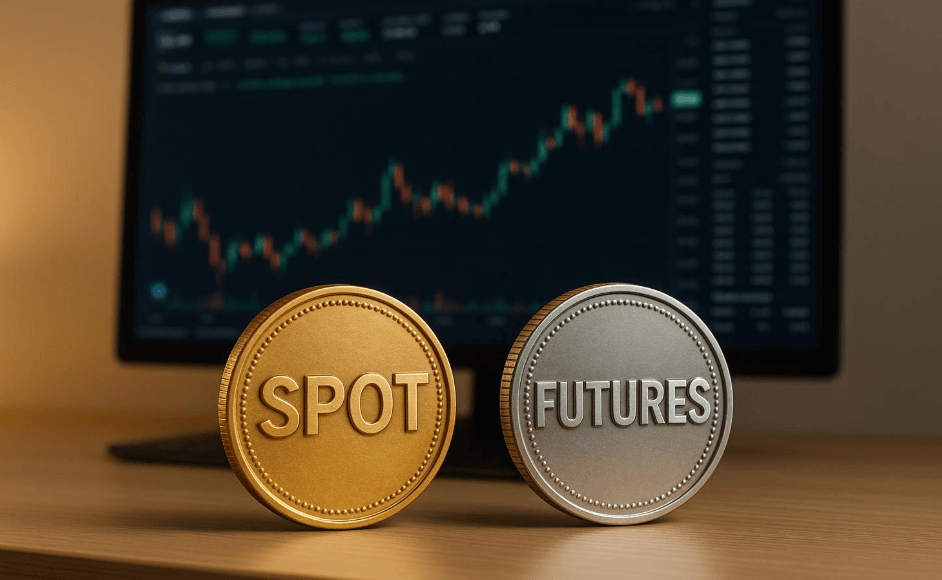
Spot Trading vs Futures Trading in Crypto
Spot trading and futures trading in crypto present distinct risk–return profiles. Spot offers immediate ownership with straightforward settlement and transparent pricing, while futures introduce forward exposure, leverage, and funding dynamics that can amplify both gains and losses. Margins, maintenance requirements, and expiry add complexity and capital considerations. Costs, tax, and regulatory factors shape viability and strategy. The choice hinges on risk tolerance, liquidity access, and hedging needs, leaving a practical decision contingent on how one weighs certainty against efficiency.
Spot vs Futures: Which Should You Own Today?
Spot trading and futures trading represent two fundamental approaches to crypto exposure, each with distinct risk, liquidity, and cost profiles.
The analysis compares immediate ownership and settlement mechanisms with forward-price commitments, evaluating potential returns, diversification, and capital efficiency.
Spot advantages are contrasted with futures complexities, highlighting execution certainty, funding costs, and hedging applicability for a freedom-seeking investor audience.
Leverage, Margin, and Expiry: How Risk Differs
Leverage, margin, and expiry fundamentally reframe risk in crypto trading, distinguishing how capital does and does not participate in potential losses and gains.
In futures, leverage differences amplify exposure beyond invested capital, altering risk profiles and liquidation thresholds, while margins act as performance guarantees.
Expiry limits uncertain duration.
Margin requirements, transparency aside, shape capital allocation and strategic flexibility.
Costs, Fees, and Capital: What Each Trade Demands
Costs, fees, and capital requirements delineate the finite economic footprint of each trading approach. A data-driven comparison shows spot trading incurs spot fees and potential custody costs, while futures involve margins, leverage costs, and periodic maintenance.
Contract expiry, settlement methods, and funding rates shape risk, liquidity, and capital efficiency, guiding freedom-seeking participants toward calibrated, transparent cost structures.
Regulation, Tax, and A Practical Path to Choice
Regulation, tax treatment, and the practical pathway to choosing between spot and futures trading hinge on jurisdictional clarity and financial transparency.
The analysis highlights regulatory impact on product suitability and risk controls, while tax implications shape after-tax returns and reporting burden.
A disciplined framework clarifies compliance requirements, enabling an informed, freedom-oriented choice between markets based on personal risk tolerance and operational practicality.
Conclusion
Compared to spot, futures offer greater capital efficiency and hedging reach, but add leverage risk and funding dynamics that complicate risk management. Data shows tighter spreads and convergent pricing at expiration, yet maintenance margins and funding costs can erode returns in volatile regimes. An objection—that futures are too complex for prudent investors—is countered by emphasizing transparent risk controls, defined horizons, and disciplined position sizing. For many, a blended approach balances ownership certainty with targeted forward exposure.